
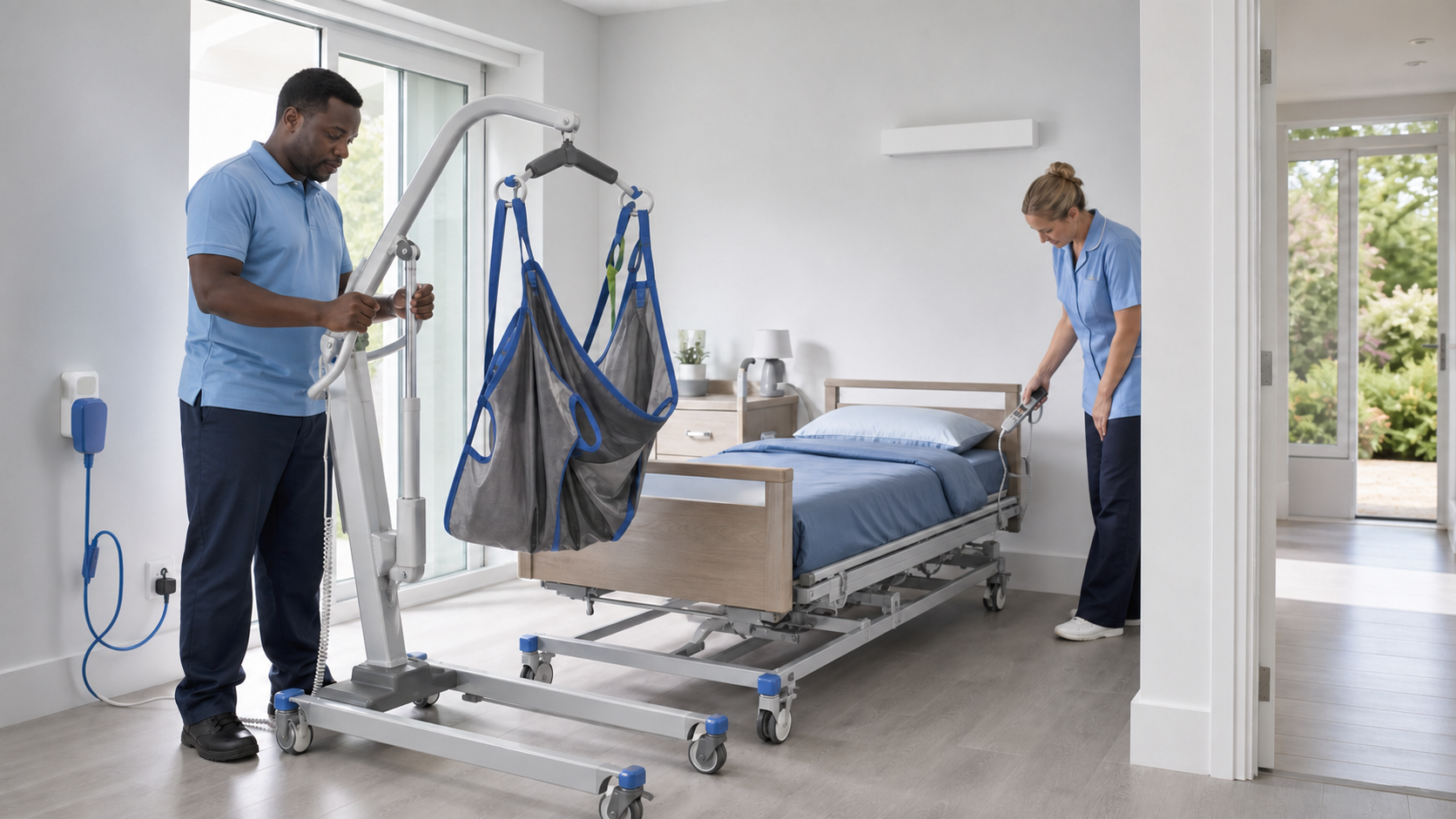
Most households and care providers do not want to become equipment procurement specialists. They want a dependable outcome: technology that meets a care need, a commercial route they can understand and clear responsibility for support and replacement.
The friction is commercial as much as technical. Smart beds, lifting equipment, connected care systems and robots can carry meaningful upfront cost, supplier and equipment complexity, setup work and lifecycle uncertainty.
The Adoption Gap
Manufacturers are optimised to build and support their products. Families and care teams are focused on the person and the outcome. Between those worlds sits the missing layer: product selection, finance, contract structure, deployment coordination, lifecycle record keeping and service accountability.
Leasing infrastructure turns a difficult capital decision into a managed access path. A short lease can suit a temporary or uncertain need. Longer finance can spread the cost of equipment expected to remain useful for years. Purchase remains appropriate where ownership is simpler.
What Good Leasing Infrastructure Should Hold
- Which product is provided, where it is used and for which care outcome.
- Which supplier, support route and commercial terms apply.
- What incidents, maintenance events and customer-impacting activity have occurred.
- When upgrades, returns, replacements or contract changes should be considered.
- How performance and service economics are tracked over time.
The Just Hail Mary Thesis
GE Capital built leasing infrastructure around industrial equipment. Just Hail Mary is applying the access logic to care technology: a commercial operating layer that can join the right product to the right duration, setting and support path.
Continue learning